We use cookies for site functionality and analytics. Non-essential cookies load only with your consent. See our
Cookie Policy and
Privacy Policy.

Tbilisi Medical Academy
The academy’s founder, our mission and the key milestones of our development.


Academy history
Choose a year
The beginning of the history of Tbilisi Medical Academy.
First generations trained — the start of the alumni story.
Institutional authorization granted.
7-year accreditation of the Georgian and English-language medical programs.
Accreditation of the Master’s program in Public Health.
Renewal of institutional authorization.
Accreditation of the PhD programs in “Medical Sciences” and “Public Health”.
Located in the heart of Tbilisi, Georgia's vibrant capital, Tbilisi Medical Academy (TMA) has been offering medical education programs since 1992. With centuries of history, a rich cultural identity, and a rapidly developing healthcare and education sector, Tbilisi is situated at the crossroads of Eastern Europe and West Asia. Tbilisi is known for its safety, hospitality, and international atmosphere, creating an immersive and safe environment at an affordable cost of living, diverse cuisine, active lifestyle, and easy access to both mountains and the Black Sea coast.
At TMA, students benefit from high-quality academic training, early clinical exposure, and an international learning environment that prepares them for successful medical careers worldwide.
History
Tbilisi Medical Academy was founded in 1992 by notable Georgian physician and pediatric surgeon Petre Shotadze. After graduating from Tbilisi State Medical University in 1970, all of his doctoral, scientific, and academic activities were connected to the Tbilisi State Institute of Postgraduate Education for Physicians, where he advanced from postgraduate student to Head of Pediatric Surgery and Rector.
In 1999, following the death of Dr. Shotadze, Tbilisi Medical Academy was renamed Petre Shotadze Tbilisi Medical Academy. Since its foundation, TMA has produced nearly 2,500 graduates who work successfully in leading hospitals, universities, and scientific research centers in Georgia and abroad.
 Mission
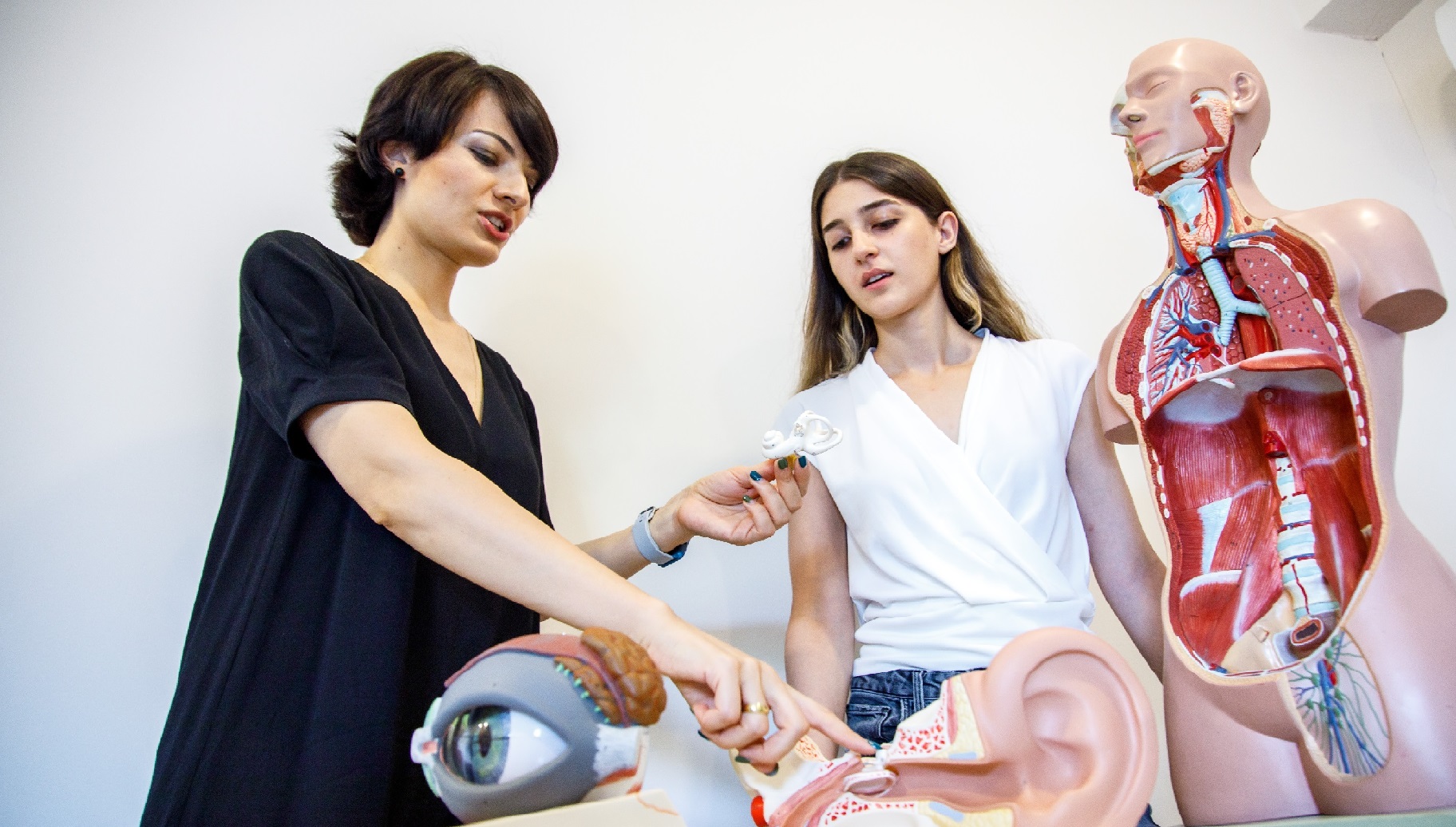
TMA mission: as a student-oriented higher education institution, TMA seeks to educate national and international healthcare professionals through innovative approaches and the use of evidence-based knowledge.
At the same time, the academy contributes to the development of Georgian society through research-based activities and academic engagement.
 Identity
The identity of the academy is visually expressed through the logo. It depicts an owl, a symbol of wisdom. The academy carries 30 years of experience and history, which is why the owl became our coat of arms, while the book and founding date give the logo deeper meaning.
The final step was selecting the color. Blue symbolizes wisdom, loyalty, trust, and authority. Because the academy is distinguished by these qualities and educates outstanding doctors around the same values, the logo color was chosen naturally.