The Erasmus+ Capacity Building in Higher Education project LIFESTRAND, coordinated by Petre Shotadze Tbilisi Medical Academy (TMA), is among the most significant achievements in expanding access to life-saving emergency response skills for up to 7,200 citizens, strengthening the social mission of universities, and building a sustainable model of international academic cooperation.
The project aims to equip vulnerable populations living in high-risk, conflict-affected areas with essential first-aid and emergency-response skills. Particular attention is given to communities impacted by the consequences of Russian occupation and military aggression in Georgia and Ukraine.
LIFESTRAND brings together a consortium of universities from Georgia, Ukraine, Spain, and Portugal, creating a platform for international collaboration in health education and community resilience. The consortium includes Petre Shotadze Tbilisi Medical Academy, the University of Santiago de Compostela, the University of Porto, Tbilisi State Medical University, Grigol Robakidze University, Alte University, Ternopil National Medical University, Lugansk State Medical University, and Poltava State Medical University.
One of the project's key output has been the development of a First Aid and Emergency Response Manual by the University of Santiago de Compostela, the University of Porto, and the Semergen Association. The resource serves as a sustainable tool for knowledge transfer, capacity building, and technical support for students and academic staff in Georgia and Ukraine.
Overall, the project is expected to benefit 242 students and staff members from seven universities in Georgia and Ukraine, while its long-term societal impact will reach approximately 7,200 citizens living in areas exposed to heightened security and humanitarian risks.
Through a cascading training model delivered by European partners, academic staff from Georgia and Ukraine were certified as Senior Trainers and subsequently trained university students as Junior Trainers. As a result, 129 student trainers have already been prepared in Georgia and have delivered first aid training to 2,267 members of the non-medical population across the country.
The project's final dissemination event was held in Batumi from 15–18 June 2026, bringing together representatives of all consortium universities, regional authorities, and stakeholders from the education and community sectors. As project coordinator, TMA presented the project's achievements, beneficiary statistics, impact indicators, and sustainability plans.
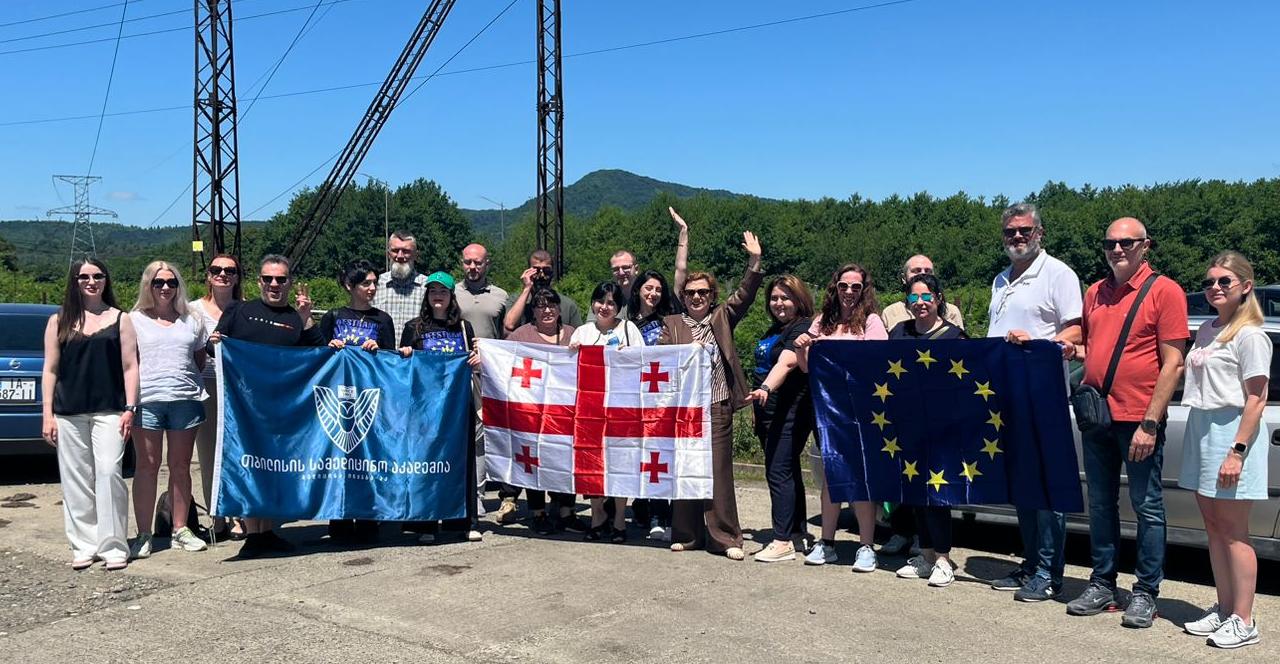
As part of the closing activities, consortium members visited communities near the Enguri Bridge, including Rukhi and Pakhulani, where emergency response training sessions and preventive health examinations were conducted for residents.
LIFESTRAND demonstrates how international academic partnerships can generate measurable social impact beyond university campuses. By connecting higher education, public engagement, and practical healthcare training, the project contributes to stronger, safer, and more resilient communities while empowering citizens with skills that can save lives in emergencies.