
Understanding a Global Challenge Through a Local Perspective
Tbilisi Medical Academy (TMA) hosted a stakeholder engagement workshop to present findings from the study “Outdoor Air Pollution in Tbilisi: An Exploratory Study.” The event brought together academics, policymakers, public health professionals, civil society representatives, and international organizations to discuss public perceptions, behaviors, and potential responses to air pollution in Tbilisi.
The study was conducted through a collaborative partnership involving TMA students and faculty members, together with students and colleagues from Akkon University of Applied Sciences in Berlin, within the framework of the academic partnership with the Institute for Research in International Assistance (IRIA) at Akkon University. The workshop featured contributions from the World HealthOrganization Country Office in Georgia, the UNDP Country Office, and members of the research team.
The study, led by Silvia Zanetti, Manizha Khakimova, Nana Katchiuri and Mariam Kevkhishvili,, through the Engagement Global ASA Program - an exchange and scholarship programme in the field of development policy - was carried out under the academic supervision of Dr. Mariam Maglakelidze (Co-Head of the Institutional Culture Development Department ). The study was designed to address an important evidence gap: while air quality data are increasingly available, far less is known about how communities perceive pollution-related health risks and how these perceptions influence their awareness, attitudes, and behaviours.
At the workshop opening, speakers highlighted that outdoor air pollution remains one of the world’s major public health challenges, contributing to millions of premature deaths annually through exposure to pollutants such as particulate matter, nitrogen dioxide, ozone, carbon monoxide, and sulfur dioxide.
For Georgia, improving air quality remains a national priority, with ongoing efforts focused on strengthening monitoring systems, assessing health impacts, and advancing emissions regulation in line with the United Nations Sustainable Development Goals. While environmental monitoring and policy measures are essential, the study addressed another critical dimension: how residents themselves understand air pollution risks and whether awareness translates into protective behavior.
Conducted among adult residents of Tbilisi in October 2025, the cross-sectional study examined levels of knowledge, risk perception, and protective practices related to air pollution. The research team used a diverse recruitment approach, engaging participants from different districts of the city, including individuals reached through healthcare facilities such as the Chapidze Clinic and the National Surgery Center.
One of the key findings presented at the workshop was the gap between awareness of air pollution and individual action. Although many residents recognize air pollution as a serious concern, awareness alone does not consistently lead to behavioral change.
Researchers identified several factors influencing this gap, including limited public discussion of air pollution, a lack of visible clean-air initiatives, and perceptions that individual actions have limited impact. These findings suggest that effective responses require more than information campaigns; they need supportive social environments, practical guidance, and stronger public engagement mechanisms.
The study also revealed significant public readiness to support broader interventions. Notably, 68% of respondents indicated willingness to pay higher taxes if this would contribute to reducing air pollution. This finding suggests that many residents may support collective solutions and policy measures aimed at improving urban air quality.
Translating Research into Action
The workshop discussions focused on transforming research findings into practical recommendations. The resulting policy brief highlighted four priority areas:
- Public communication: developing targeted and trusted communication strategies through channels such as social media and television;
- Behavioral support: providing accessible and actionable information, including real-time air quality guidance;
- Regulatory measures: strengthening implementation and enforcement of existing environmental regulations;
- Health system integration: promoting closer cooperation between environmental and public health institutions.
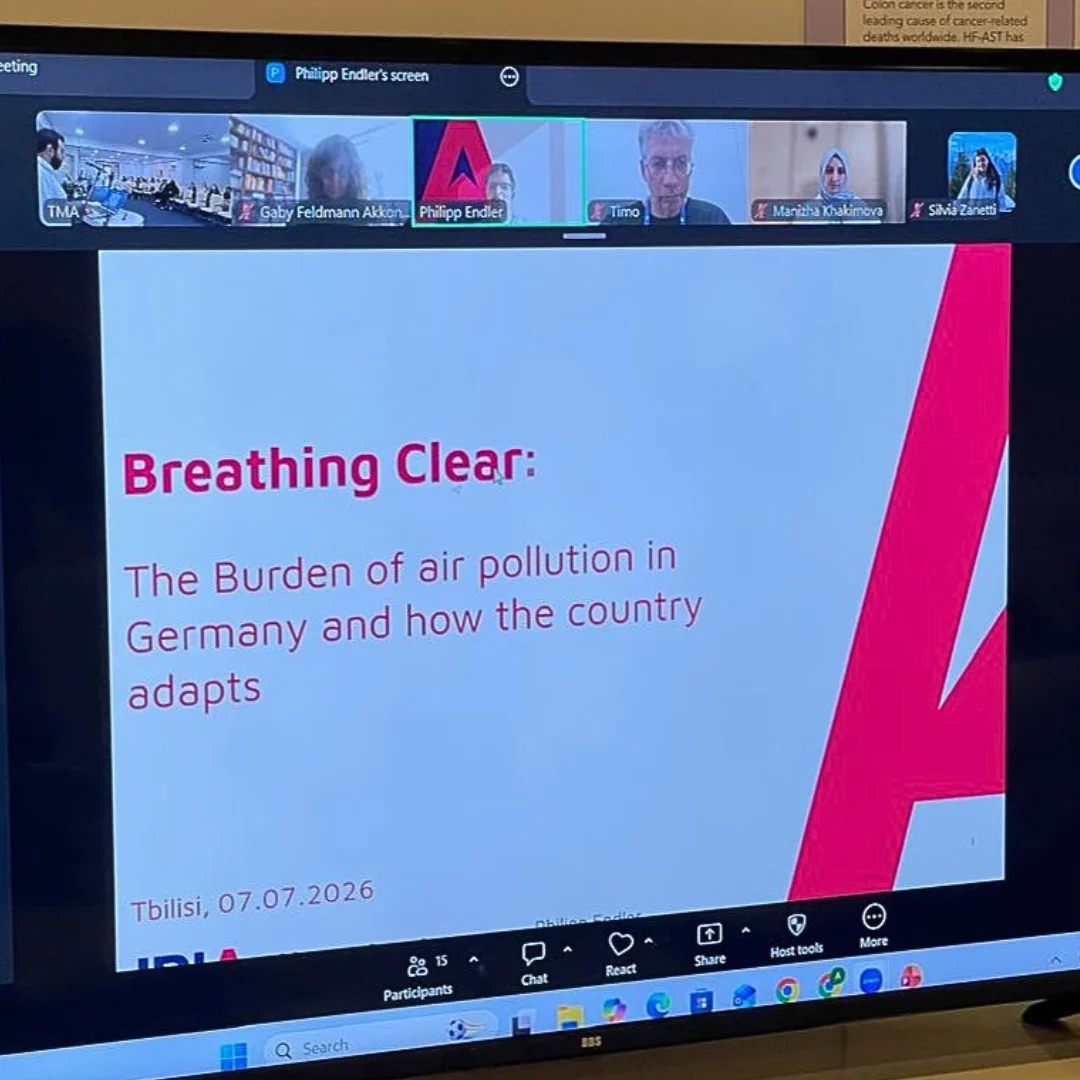
The workshop also included international perspectives from Akkon University and the Institute for Research in International Assistance, including discussions on Germany’s experience in addressing air pollution and emerging evidence on links between air quality and mental health. Representatives from WHO Georgia and UNDP Georgia shared insights into behavioral approaches, environmental initiatives, and ongoing efforts to improve air quality and sustainability.