
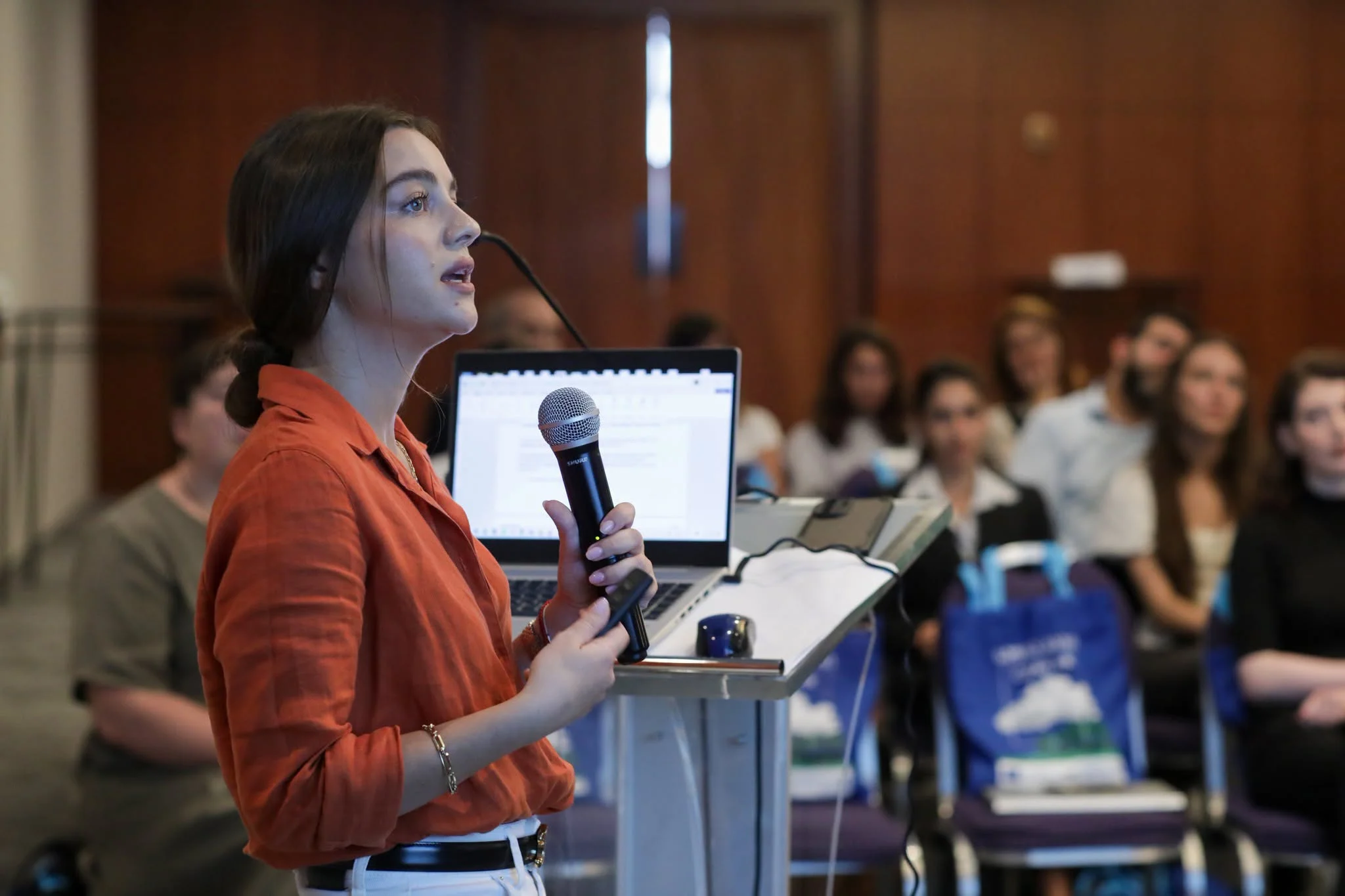
Students of Tbilisi Medical Academy participated in a Youth Conference dedicated to the health impacts of air pollution and climate change, bringing together young people, healthcare professionals and international organizations representatives to explore the links between environmental health and human well-being.
Held under an EU-funded UN joint program implemented by the United Nations Development Programme (UNDP), the World Health Organization (WHO), the United Nations Economic Commission for Europe (UNECE), and the Environment Agency Austria (UBA), the conference provided a platform for future healthcare professionals and EU Young Ambassadors to examine the health consequences of air pollution and discuss meaningful ways for young people to contribute to climate action.
TMA students presented research-based topics highlighting different dimensions of environmental health, including:
- Air Pollution & Cancer, examining the relationship between exposure to air pollutants and cancer risks;
- Air Pollution & Its Implications on Pregnancy, focusing on the potential effects of air pollution on maternal and fetal health;
- Shielding the Brain from Climate Change, exploring the impact of climate-related environmental changes on neurological health;
- Exploring the Impact of Polycyclic Aromatic Hydrocarbons (PAHs) on Atopic Dermatitis, examining the relationship between environmental pollutants and skin health;
- The Invisible Energy Drain, addressing the health implications of heat stress and environmental conditions.
The conference also created an opportunity to connect scientific knowledge with broader questions of public health, youth engagement, and sustainable development.
Among the speakers were Douglas Webb, UNDP Resident Representative in Georgia; Lucia Di Troia, Deputy Head of Cooperation at the Delegation of the European Union to Georgia; João Joaquim Rodrigues da Silva Breda, WHO Representative and Head of Country Office in Georgia; and Maka Maglakelidze, Co-Head of the Institutional Culture Development Department at Tbilisi Medical Academy.
The event was held within the framework of an EU-funded program that brings together UNDP, WHO, UNECE, and UBA to support improvements in air quality management in Georgia and safeguard the health of the country's population. The program focuses on strengthening air quality monitoring and forecasting, developing health-related air quality assessment capacities, supporting a national reference laboratory, strengthening institutional and technical capacities, and improving the regulation of industrial emissions.
Strengthening Partnerships for Health and Sustainable Development
For Tbilisi Medical Academy, the conference represented more than an academic exchange. It also opened a space for discussing opportunities for shared-value partnerships between TMA and international organizations, including UNDP, the European Union, and WHO.
The discussions highlighted the importance of strengthening collaboration that contributes to students' human capital development while expanding TMA's strategic partnerships and engagement in initiatives addressing public needs.
As a medical education institution, TMA sees meaningful opportunities to connect its educational mission with its broader role in society, contributing academic expertise, student engagement, and healthcare perspectives to initiatives that advance public health and sustainable development.
The Academy's participation also reflects its commitment to developing partnerships that can evolve into more structured and sustainable forms of cooperation, creating opportunities for joint educational initiatives, knowledge exchange, youth engagement, and projects addressing shared societal challenges.
Through such engagement, TMA continues to explore ways to strengthen its third mission, extending its impact beyond education and research by contributing knowledge, expertise, and student capacity to the wider community and to public-good initiatives.
The Youth Conference demonstrated the value of bringing together future healthcare professionals and international partners around a common challenge: understanding environmental risks and working collectively towards a healthier and more sustainable future.